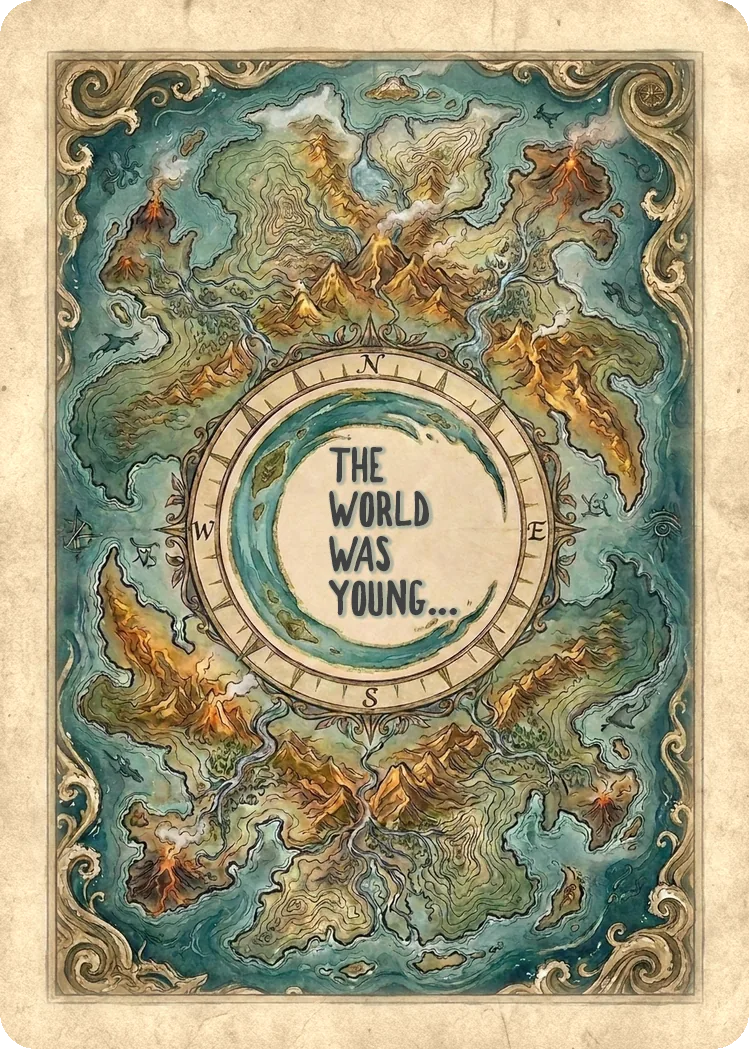
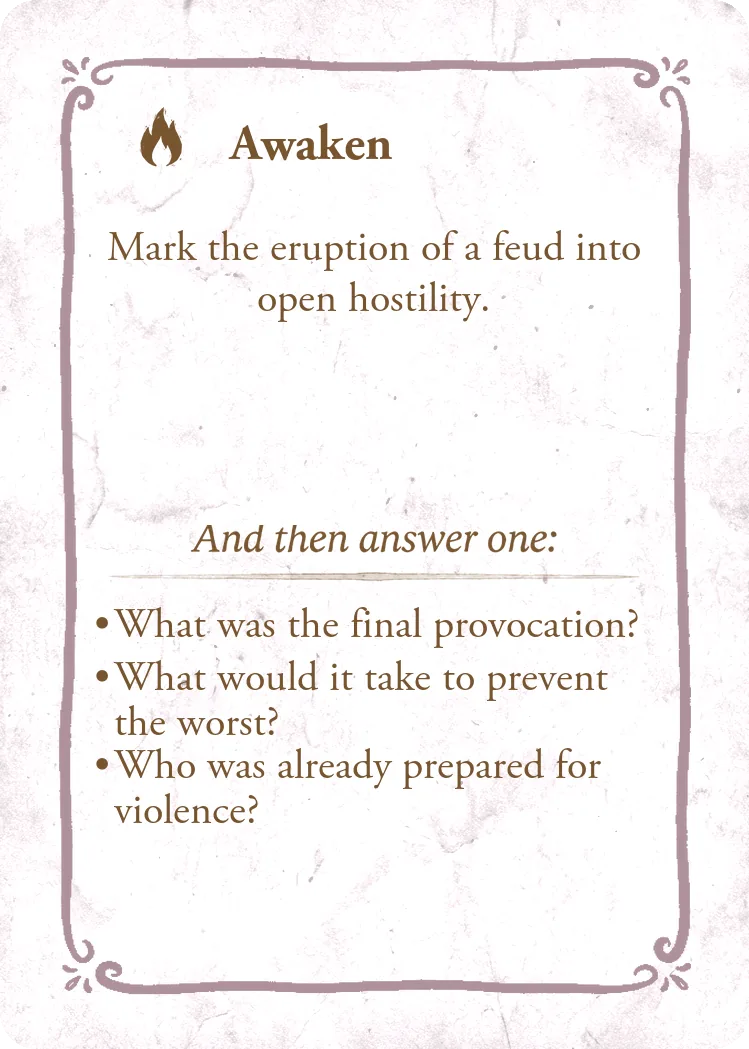
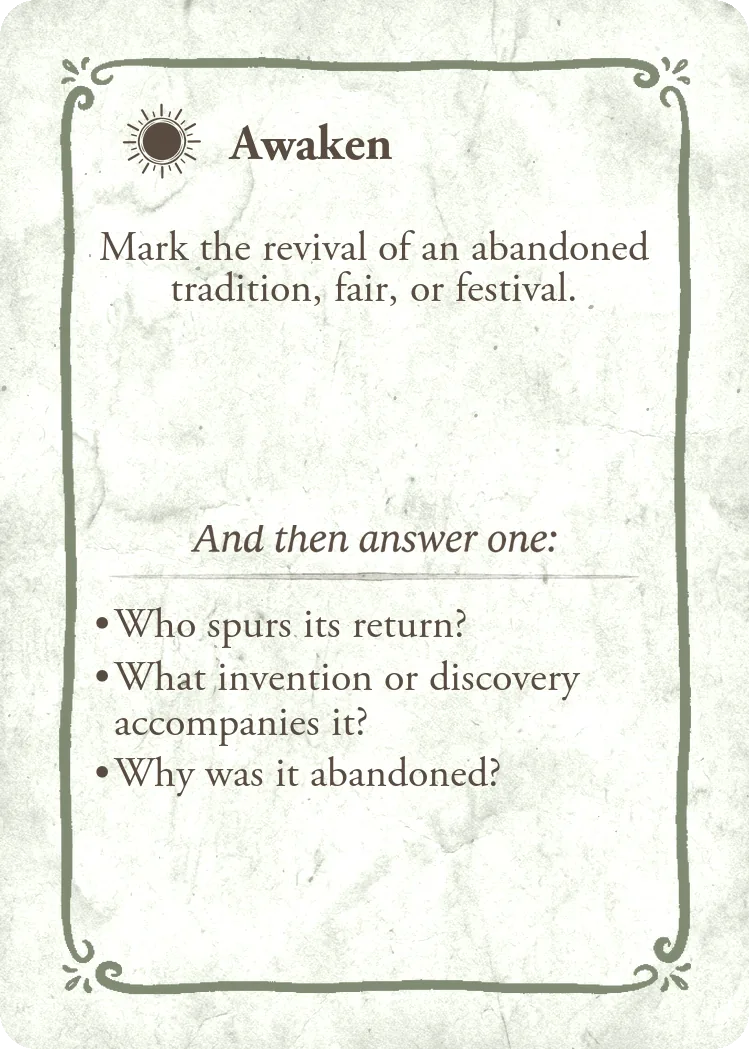

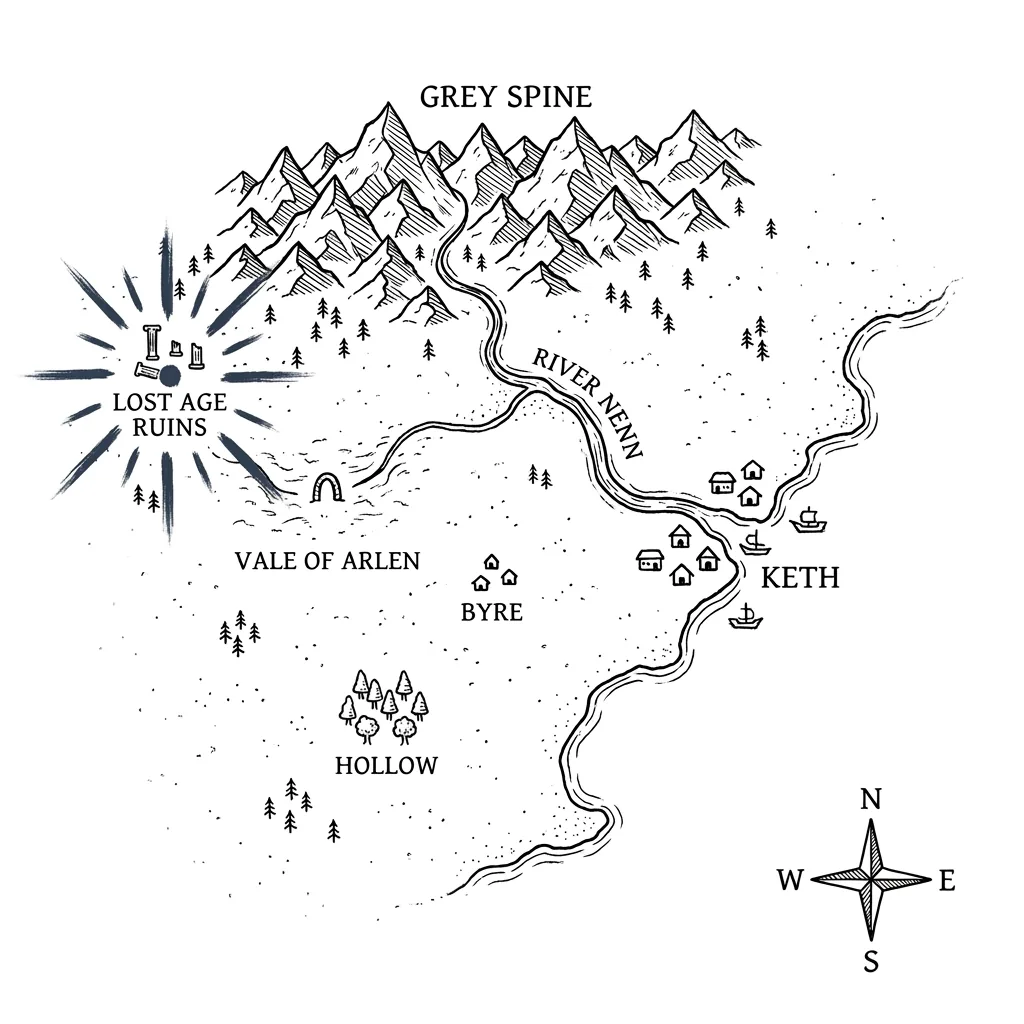
A map with names and scars.
This is more than just a geographic representation. It contains the people, places, conflicts, and everything else your table Marked.


In the silence, before the first age
A collaborative, storytelling card game that brings the table together to build a TTRPG setting.
The best campaign settings aren’t written. They’re played.
In Session Zero, you build characters. In Session Negative One, you build the world.
Session Zero has improved TTRPGs by increasing communication between players and GMs. It helps ensure that everyone is on the same page about safety, the type of game being played, characters, and more. But it doesn’t solve a major pain point.
Even if they’ve read the twenty-page setting background from the GM, players arrive at Session Zero as outsiders. The problem is that players need to create characters that are native to that world. How do we bridge that gap? How do we overcome that outsider status?
Session Negative One, powered by The World Was Young.
The World Was Young brings players into the worldbuilding process from the beginning, increasing their investment and ownership of the setting before the game even begins. The twenty-page setting doc is replaced with an hour and a half of group worldbuilding. The result isn’t something that the players read. It’s something that they helped write.
Players can weave their characters into threads they helped spin across the history of the world. Maybe their PC is the last of a civilization of Orcs destroyed hundreds of years ago. Or perhaps the descendant of a forgotten monarch. Whatever the choice, the table has an understanding of that character from the beginning.
When the GM references the ancient civilization of sentient Axolotls that was destroyed a thousand years prior, she doesn’t have to lore-dump anything; the players already know about that civilization.
The World Was Young distributes the responsibility of worldbuilding without sacrificing GM agency. GMs have full control of when and where their game is set, and they can add to or modify the world as they see fit.
Free print-and-play
The World Was Young is currently in playtesting, and the full print-and-play deck is available for free. Not a demo. The full game deck. All we ask in return is that you give us some feedback after you play. Tell us where to send it, and we’ll email you the download link, along with occasional updates as the game heads toward launch.
Check your inbox. The deck is on its way. (If it’s not there in a few minutes, check your spam folder.)
Grab your table and play. Every player in a reported playtest is eligible for an exclusive crowdfunding reward, reserved for early playtesters.
One or two emails a month, mostly worlds our playtesters build. Unsubscribe anytime.
How the game works
That’s the whole loop. The table takes turns building a world, one card at a time, across three Ages.
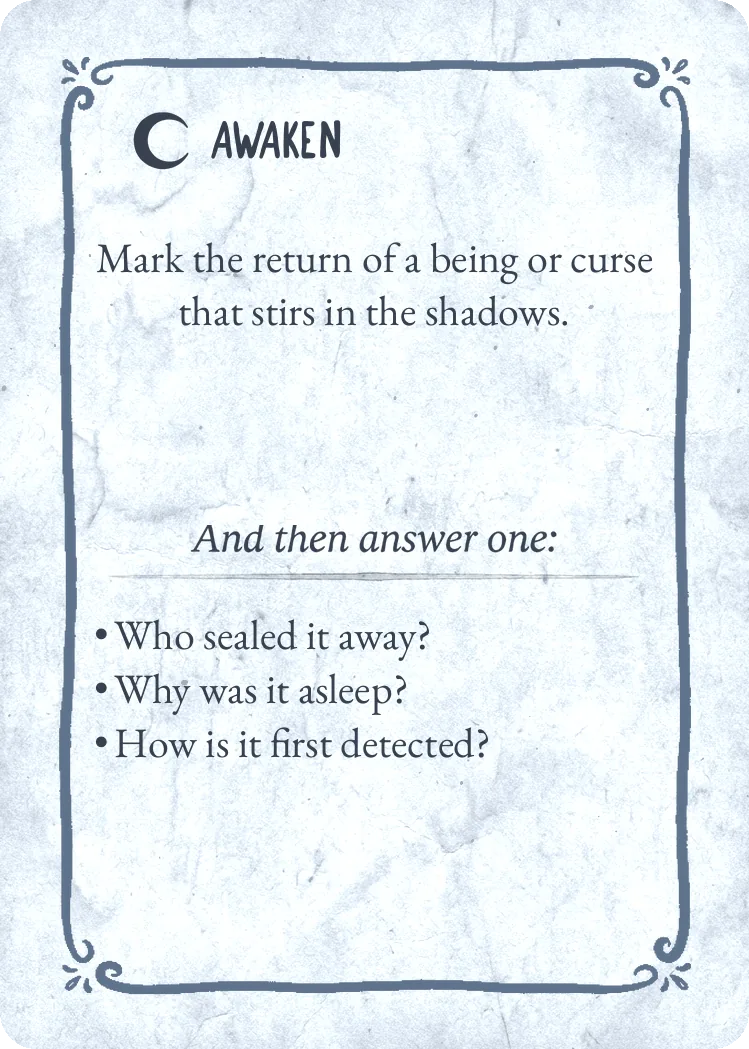
Every game starts with —
A world, a continent, a city, a spiral arm of a galaxy. Sketch it in a few minutes, or bring one already seeded. Every turn adds something to it: a community, a ruin, a conflict, a wound. By the end, every Mark has a story the table remembers.
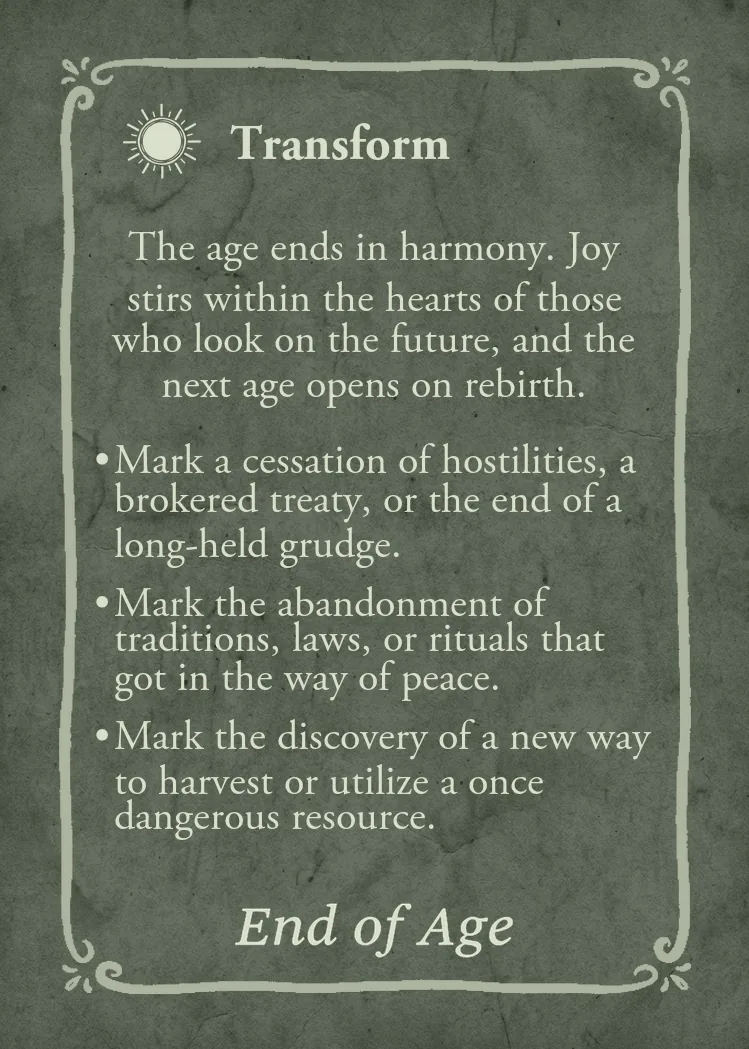
Three Ages, three Age decks. And shuffled into the bottom of each —
When it’s drawn the Age ends, and the player who drew it reads the card’s Vibe aloud (preferably in a dramatic fashion) and Marks three things instead of one. The table decides how much time passes, and the next Age begins.
The third End of Age ends the game.
Reading about a turn isn’t the same as taking one. Try it out below.

An Age, compressed
That was five cards from one Age. A full game consists of three Ages. Here’s what’s on the table when the third Age closes:
This is more than just a geographic representation. It contains the people, places, conflicts, and everything else your table Marked.

Built across three Ages, the world is deep and full of details just waiting to be used by players and the GM.

No one read about this world. Everyone helped write it. That’s an investment no setting doc can create.
It’s the world you bring to your next campaign.
The newsletter
News from the making of The World Was Young: playtest worlds, design notes, and the road to launch. One or two emails a month.
You’re on the list. News from the world is on its way.
Unsubscribe anytime.